Call 1-855-435-7693
ICIRR hotline to report ICE activity in your community
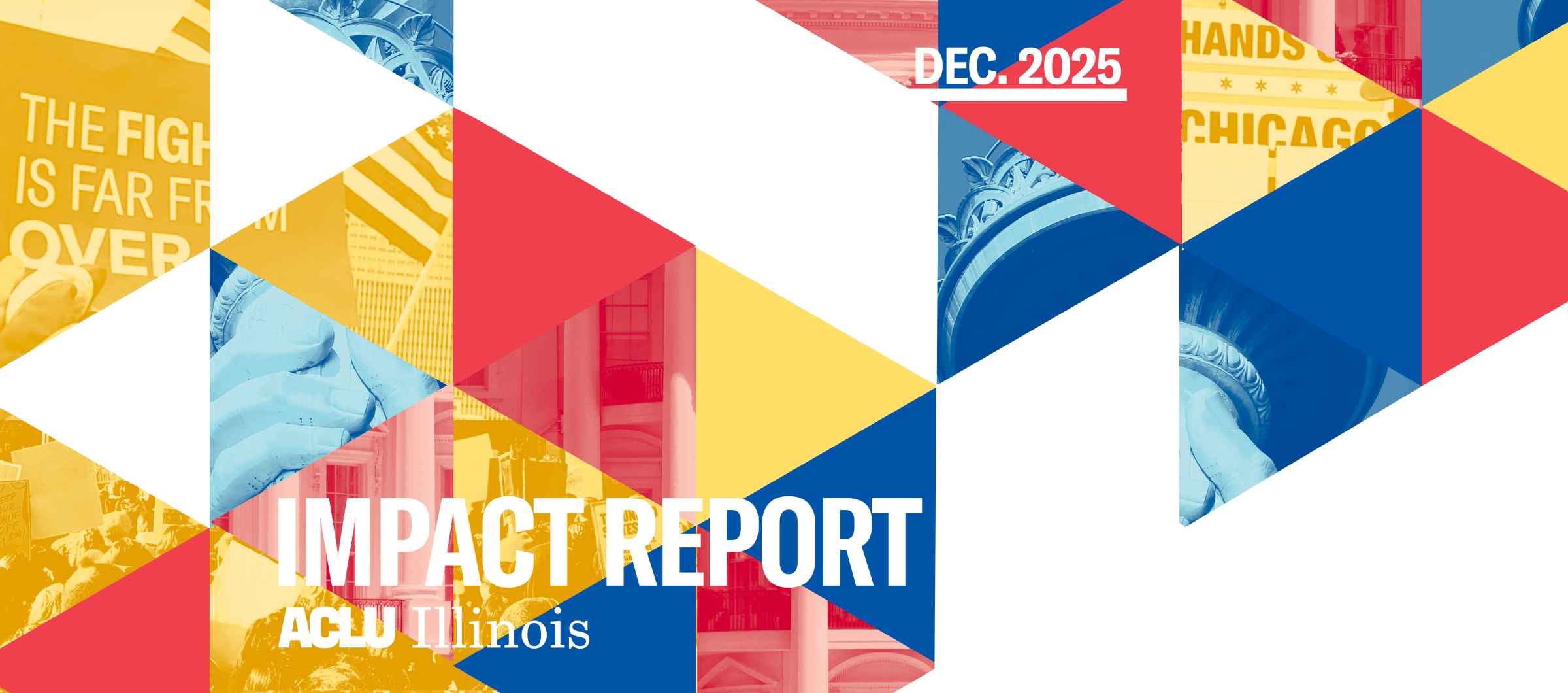
We all have a role to play in protecting our rights and defending our democracy. None of us can avert our eyes or silence our voices in protesting these attacks on our humanity.
A few weeks ago, we marked the 162nd anniversary of President Lincoln’s address at Gettysburg, consecrating the graves of the thousands who had died defending the Union. President Lincoln gave voice to a collective grief, and urged Americans to complete the “unfinished business” of preserving the Union so that those deaths did not happen in vain.
Today President Lincoln’s words resonate as loudly as they did in 1863. The second Trump administration is attacking the underlying principle of our constitutional democracy – that all people are equal under the law – in as frontal a manner as Jefferson Davis and his band of secessionists did in the Civil War. Trump and his minions’ blatant bigotry fuel their incendiary attacks on the constitutional protections in the Civil War Amendments:
This bigotry motivates his administration’s efforts to selectively strip Americans of other constitutional rights, including:
In the face of these attacks, people are responding with a multitude of lawful and peaceful strategies, underscoring that each of us has a role to play in defending our democracy.
We all have a role to play in protecting our rights and defending our democracy. None of us can avert our eyes or silence our voices in protesting these attacks on our humanity. Each of us must continue to do what we can – each individual act, no matter how seemingly small, piled atop individual act, ultimately will prevail, and secure the foundation we need to begin improving the democracy we have just helped preserve.
The ACLU of Illinois continues to vigorously contest “Operation Midway Blitz,” the Trump Administration’s reckless and violent immigration enforcement efforts. In response to repeated incidents of illegal arrests and detentions, attacks on protestors, journalists and clergy members, and unconstitutional conditions for those detained, the ACLU of Illinois and its partners are litigating four important lawsuits:
The ACLU-IL and the National Immigrant Justice Center (NIJC) filed this case during the first Trump administration on behalf of immigration rights groups, including the Illinois Coalition for Immigrant and Refugee Rights (ICIRR) and Organized Communities Against Deportation (OCAD). We challenged hundreds of warrantless arrests of immigrants during pretextual traffic stops. We initially resolved this litigation with a consent decree that prohibits federal officials, including Immigration and Customs Enforcement (ICE) and Customs and Border Protection (CBP) from detaining immigrants unless they have reason to believe that the person they want to arrest is present in the United States in violation of immigration law and is likely to escape before a warrant can be obtained for the arrest.
Department of Homeland Security agents began to flout the settlement shortly after the start of Trump 2.0, arresting scores of Latino people, including some U.S. citizen, without valid warrants. We filed enforcement motions challenging these violations of the consent decree and the constitutional protections on which the decree was based.
In October, U.S. District Court Judge Jeffrey Cummings granted our motion to enforce the consent decree and extended its protections until February 2, 2026. The judge’s ruling requires ICE to reissue its Broadcast Policy on Warrantless Arrests nationwide and produce any information for people arrested in the Chicagoland area since June 2025 so that we can assess whether those arrests violate the consent decree. A later ruling by the judge ordered the release of hundreds of immigrants – unless the federal government could make an individualized showing that continued detention was needed because the immigrant posed a risk to public safety.
In a deeply disappointing decision in late November, an appeals court delayed the release of hundreds of Chicago-area community members who have been arrested without warrants or probable cause. The court heard oral arguments on whether a longer-term stay is appropriate on December 2nd.
Following violent and unnecessary actions by federal law enforcement officers targeting demonstrations outside of the Broadview ICE Facility as well as in communities across the Chicagoland area, we and other advocacy groups filed suit on behalf of the Chicago Headline Club and other plaintiffs to stop the ongoing violations of fundamental First Amendment rights. A federal court swiftly granted a temporary restraining order, followed by a preliminary injunction, that limited the unnecessary use of projectiles, chemical agents, and other types of force against protestors and journalists in the Chicago area. The court also ordered federal agents to wear body cameras, clearly display identification, and refrain from targeting journalists solely for doing their jobs. In mid-November, an appellate court panel paused enforcement of the injunction.
Then in December, the plaintiffs voluntarily dismissed the case, as Gregory Bovino’s DHS forces have already left the region. We are proud to have represented the protestors, journalists, and clergy who brought this case. Their courage is worthy of our praise, and they collectively reflect the First Amendment values we all cherish. Moreover, these clients represent the thousands of people – from all parts of the Chicagoland area – who stood up the bullying behavior of this Administration which sought to undermine our community’s larger commitment to protecting immigrants and protecting democracy.
We filed a lawsuit alongside MacArthur Justice Center and Eimer Stahl to challenge the conditions for people detained at Broadview ICE Facility, conditions that can best be described as “inhumane.” In response, a federal court issued a temporary restraining order requiring ICE to immediately provide detainees with adequate meals, clean bedding, hygiene items, and access to counsel. Our lawsuit seeks long-term relief to ensure that the conditions at Broadview meet constitutional standards and that immigrants detained their have access to counsel and are no longer pressured or coerced into giving up their rights. Members of the legal team visited Broadview Facility in November, and a hearing has been set for December 17th.
In conjunction with the National ACLU and other free speech groups we filed an amicus brief urging the U.S. Supreme Court to maintain the block on the Administration’s deployment of National Guard troops in Chicago. Both the federal district court and the U.S. Court of Appeals for the Seventh Circuit have so far blocked this deployment. The state of Illinois’ case is at the Court on the Trump administration’s emergency application seeking to stay or temporarily lift the lower courts’ orders blocking the deployment.
We have also hosted events for ACLU members and the general public, spoken to local and national media, remained in communication with state and local officials, participated in numerous speaking engagements and town halls, hosted know your rights trainings, provided resources and materials to groups and individuals statewide, and participated in a Congressional “shadow hearing” in October hosted by nineteen U.S. House members. The ACLU will not back down against these attacks, and it is critical that each of us continues to take action and join together in community to fight back.
We highlighted several of our partners that are doing critical work to support and protect the immigrant community of Illinois on Giving Tuesday. Please learn more about and consider supporting these organizations: https://www.aclu-il.org/en/give-together-immigrant-justice
The Illinois General Assembly reconvened for 6 days in October for Veto Session. During this time, members of the ACLU of Illinois’ Advocacy Team advanced, expanded and protected civil rights and civil liberties by: tracking new and amended bills; reviewing and analyzing hundreds of pages of legislation; participating in numerous negotiation conversations and meetings with legislators, staff, bill sponsors, and coalition partners; developing, executing and revising strategies to respond to rapidly changing dynamics; and lobbying legislators on affirmative and defensive policy priorities.
Two of the bills that we worked on are now on the Governor’s desk:
Medical Aid in Dying (ACLU of IL initiative)
One critical piece of legislation that passed the Senate and is now on the Governor’s desk was Senate Bill 1950, also known as Deb’s Law, a measure that allows mentally capable, terminally ill adults with a prognosis of six months or less to live the option of obtaining a prescription medication that they can decide to take so that they can die peacefully and end their suffering. When this measure is signed into law, Illinois will join 11 other states and the District of Columbia, and become the first Midwestern state permitting medical aid in dying.
The ACLU of Illinois has been working on this issue for more than two decades, including in strong partnership with Compassion & Choices Illinois over the last 7 years. We are grateful to the thousands of people across Illinois who have participated in the effort including the families and individuals who have courageously shared their stories. We are especially thankful to:
Deb Robertson, a lifelong Illinois resident living with a rare form of terminal cancer, who has been actively engaged in advocacy to change Illinois law because she doesn’t want to move to another state in order to access the end-of-life medical care that would bring her comfort and reduce her fear related to the pain of dying.
Suzy Flack, mother of Andrew, who could not move back to his home state of Illinois to be with his family after his terminal diagnosis and instead had to live hundreds of miles away from his family in a state that offered medical aid-in-dying care. Suzy made a promise to Andrew to continue his advocacy to change the law.
Miguel Carrasquillo, who despite enduring excruciatingly painful treatment to try to cure his cancer, continued to advocate for a change in the law until his death so no other Illinoisans with a terminal diagnosis would not be forced to suffer and die in pain at the end of their lives.
We are also grateful to all of the legislators – especially our sponsors, State Senator Linda Holmes and State Representative Robyn Gabel – for their leadership and commitment to getting this legislation to the Governor’s desk. We urge Governor Pritzker to sign Deb’s Law at his earliest opportunity.
State Immigration Protections
In response to the unrelenting attacks by ICE and CBP in communities throughout Illinois, legislators, in partnership with a broad range of advocacy organizations, passed HB 1312, an omnibus package of legislation aimed at protecting people from abuses by federal immigration enforcement agents in Illinois communities.
The bill included provisions that would: (1) prohibit civil arrests by federal immigration agents or others of people attending state court proceedings, codifying a 200-year-old common law privilege; (2) require day care centers, hospitals, and public higher education institutes to develop and implement policies related to the presence and actions of law enforcement, including immigration enforcement agents; and (3) create a new private right of action against persons who, while conducting immigration enforcement, commit violations of the Illinois or U.S. Constitutions (called the “Illinois Bivens Act”).
We were proud to work alongside our partners who led this effort, including the Illinois Coalition for Immigrant and Refugee Rights, National Immigrant Justice Center, Mexican American Legal Defense and Education Fund, The Network: Advocating Against Domestic Violence, the Office of the Cook County Public Defender, Legal Action Chicago, Start Early, Illinois Action for Children Latino Policy Forum, and Legal Council for Health Justice.
We encourage you to take action by letting the Governor know that you support these important initiatives and you want him to sign these bills into law.
In addition to the critical work to protect immigrants’ rights and fight back against federal abuse of power, the ACLU of Illinois continues to push forward our work to protect the rights and liberties of all Illinoisians. Recent developments include:
We have continued to host Power to the People campaign events across the state, many in partnership with local community groups, Indivisible Illinois, and Indivisible chapters. Our events focus on the Trump administration’s ongoing abuse of power, while providing critical updates on how the ACLU and our partners are defending rights, and standing up to federal agencies that continue to harm communities in Illinois and nationwide. We’ve connected with supporters in Chicago’s Logan Square and McKinley Park neighborhoods, Northbrook, Libertyville, the State Fair in Springfield, and Aurora, as well as virtually with partners in Naperville and Chinatown. We’re planning the next phase of the campaign for 2026, including potential events in Chicago’s Belmont Cragin neighborhood, Carbondale, the Quad Cities, and more locations to be announced. If you are interested in partnering with us on an event, please reach out to us at activator@aclu-il.org.
We are excited to share that the annual ACLU Lunch: Fighting for a More Perfect Union will be held on Tuesday, April 21, 2026 at 12:00 PM at the Hilton Chicago and streamed virtually. We look forward to gathering with members of the ACLU community from across Illinois to recommit to the fight for civil rights and liberties and raise funds critical to our work. Please stay tuned for program announcements in the coming months and we hope you can join us on April 21st as we gather in community to defend our rights! Sponsorships and tickets are available for purchase here.
The ACLU of Illinois proudly joined Indivisible and communities across the state in the nationwide No Kings rallies on October 18th, standing up against the Trump Administration’s abuses of power and efforts to silence dissent. From Chicago to Champaign-Urbana, Bloomington-Normal, Springfield, Rockford, Peoria, Schaumburg, Highland Park, and Arlington Heights, ACLU supporters passed out Know Your Rights resources, posters, and stickers. These events drew one of the largest single-day demonstrations in U.S. history, including more than 40 rallies across Illinois.
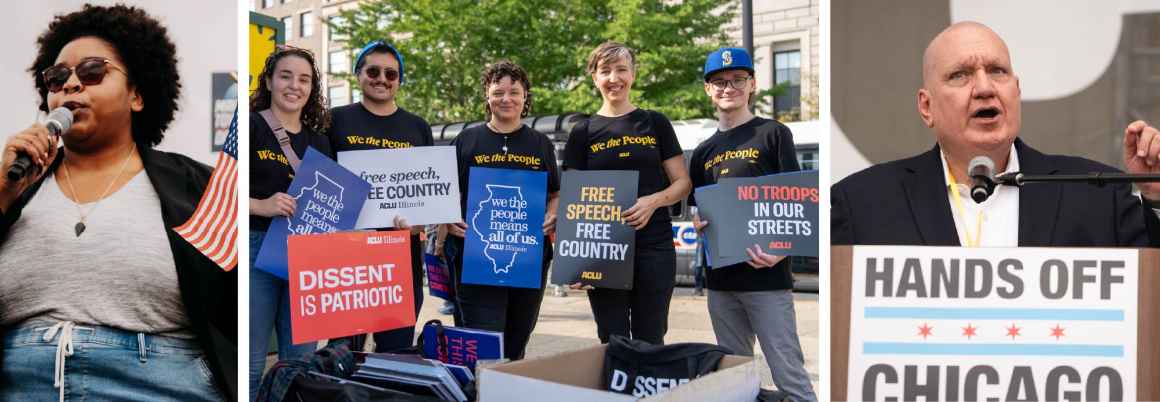
The Next Generation Society hosted its annual Fall Fundraiser on October 23rd, bringing together more than 300 supporters for an inspiring and energizing evening in support of the ACLU of Illinois. Attendees heard powerful remarks from Mykela Collins, who shared her personal story and ongoing advocacy to protect families from unlawful attempts by the federal administration to dismantle Head Start programs. We are also so grateful to ACLU-IL Board Member Bernadette Chopra, Women’s and Reproductive Rights Project Director Allison Siebeneck, and Next Generation Society Board Member Matea Varvodic, whose reflections underscored the urgency of this moment and importance of sustaining this work.
We are proud to share that we surpassed our $100,000 fundraising goal, demonstrating the strength and generosity of the Next Gen community. The momentum from this year’s fundraiser reflects the power of collective action and the vital role of the next generation in advancing civil rights and liberties for all. Learn more about the Next Generation Society here.
We held a virtual town hall on November 14th focused on the current immigration landscape in Illinois and across the country. More than 300 people joined us virtually to hear about recent federal court rulings and state-level protections on Illinois families and communities and what these developments mean for the future of immigrants’ rights in our state. Speakers included ACLU-IL Executive Director Colleen Connell, Legal Director Kevin Fee, Deputy Legal Director Michelle Garcia, Senior Supervising Attorney and Chief Immigration Litigation Counsel Samuel Cole, and Director of Communications and Public Policy Ed Yohnka.
Find more future events at www.aclu-il.org/events

The ACLU was prepared for this moment. We continue to challenge Trump’s abuse of power nationwide in the courts, in legislatures, and on the ground with supporters like you. Here in Illinois, we are working to further strengthen our protective firewall and limit the harm the Trump administration seeks to inflict, including:
We encourage you to read more about these accomplishments here: www.aclu-il.org/2025
As the Trump Administration continues to escalate its deployment of military troops and federal law enforcement to cities across the country, the ACLU and communities nationwide are fighting back. In addition to our continued opposition to federal law enforcement agents in Chicago and the surrounding area, the ACLU has challenged the Trump administration’s baseless deployment of the National Guard in places such as Los Angeles, Washington D.C., and Oregon. And we are monitoring future attempts to send federal troops to other states and cities. Communities nationwide are making clear that they don't need federal agents or military troops in their cities. The ACLU state affiliates are fighting back. Whether filing lawsuits, passing policies, or organizing protests and know your rights trainings, the ACLU is on the ground and ready to challenge these deployments.
Hear more about these deployments and how communities have been coming together in a recent ACLU At Liberty Podcast Episode: https://www.aclu.org/podcast/deployments-at-our-doorstep.
The ACLU continues to fight for fair, safe, and secure elections nationwide, including in a critical case at the U.S. Supreme Court. In mid-October, the ACLU re-argued Louisiana v. Callais, a case that will decide the constitutionality of creating a second majority-Black congressional district in Louisiana. The ruling could decide the future of the Voting Rights Act protections.
The Supreme Court also recently agreed to hear a case on whether federal law requires ballots to be not only mailed by voters and postmarked by Election Day but also received by election officials by Election Day. The ACLU previously filed an amicus brief in this case in the lower courts. The ACLU has successfully defended mail-in voting in states such as Pennsylvania in recent years and is closely monitoring these developments.
Many of the marquee cases this term involve attacks on longstanding precedents and statutes that protect fundamental rights. If the court disregards those precedents, there will be serious impacts not only on the court’s constitutional jurisprudence, but also on its legitimacy in the eyes of the public.
Emmalee Scott (she/her), ACLU of Illinois Director of Philanthropy and Engagement, answered the following questions on having conversations with family and friends during the holiday season.
Q: Why is it important to have sometimes difficult conversations with family and friends about the ongoing federal abuse of power this holiday season?
A: People in power are counting on our silence to continue expanding surveillance, criminalizing protest, and targeting immigrants and marginalized communities. Their goal is to normalize an increasingly unaccountable system that limits our fundamental rights and ignores the rule of law. This is all the more reason to have conversations about the state of our country this holiday season.
Talking with family and friends about what’s happening isn’t about ruining the mood or turning dinner into debate club – it’s about acknowledging that what happens to immigrants, to poor people, to organizers, to journalists, to whole communities that have suffered for decades is not just a distant headline, but an opportunity – a shared responsibility – to confront what we know is wrong.
When you talk with people you know over the holidays, you can have a sincere discussion in a space that isn’t filtered by algorithms, with people of different generations and backgrounds in the same room. You can say, “What do you think about what’s happening in our country?” and have it land on a human level.
Having those conversations gives us a chance to ask who benefits from what is happening in our communities, and who pays the price. We’re not just criticizing the system; instead, we can take the opportunity to gently shift away from the mudslinging of mainstream “politics,” and create a more honest and powerful reframing of the conflict at the heart of the issue: those who wield power without consequence in our society, versus everyone else who lives with the consequences.
It's essential that we have these conversations – and as someone who has had many and seen the profound effects, I believe that confronting the reality we face over a holiday get-together is not a distraction from the season – it is one of the deepest ways to honor it.
Q: Do you have any tips for these conversations?
A: First, and most importantly, engage with genuine curiosity and sincerity. Remember, this isn’t about delivering a lecture, but about listening, sharing, and connecting. That authenticity is what opens the door to a deeper, more productive exchange, which is essential right now.
Second, tune into the room. Weave the issues you care about into the natural flow of conversation – what's happening in your community, a story on the news, or even a shared family memory. Listen for what matters to the people you're with – is someone mentioning new license plate readers in their town, or rising healthcare costs, or deployment of National Guard members to cities across the country? Connect the abuse of power to the specific concerns people are sharing. This isn't about pivoting away from your point but about framing it in a way that resonates with their experience, while also speaking to any misconceptions people have.
And third, always think about the next step. Come prepared with a few resources in your back pocket – not just an article or a video to inform, but a specific, tangible way to take action. This could be anything from attending an upcoming protest, to supporting mutual aid efforts, to signing up for ACLU action alerts, to joining a community defense network. The goal is to transform that shared concern into a sense of shared agency, showing that we aren’t powerless – we just have to act together.
Explore the ACLU’s holiday conversation guide here: https://www.aclu.org/the-aclus-holiday-conversation-guide
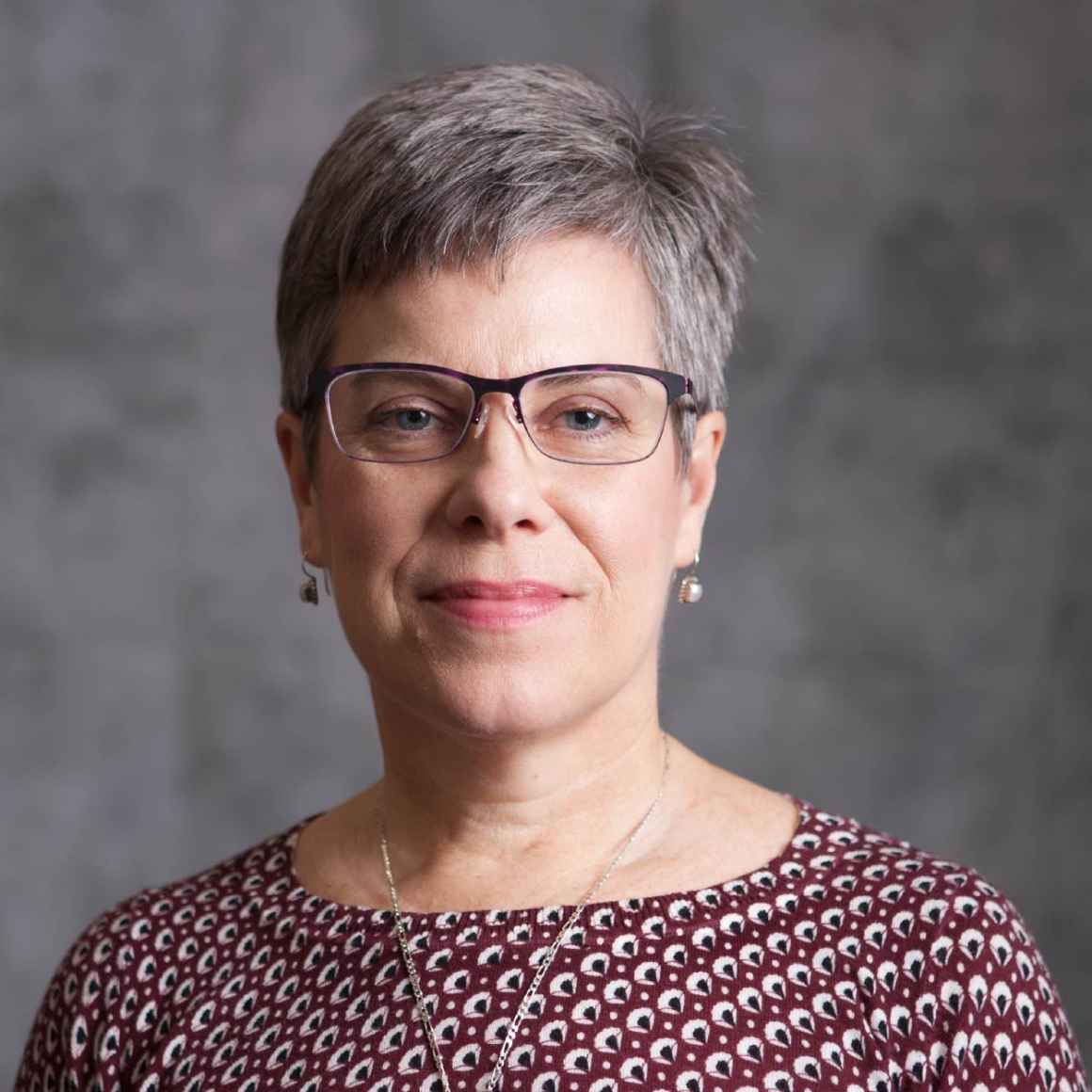
K.T. Sullivan joined the ACLU of Illinois staff in 1988, serving in several roles including Membership Director, Development Director, and currently Associate Director, where she is responsible for oversight of Operations, IT, Human Resources and special projects. K.T. plans to retire this month.
Q: What brought you to the ACLU of Illinois?
A: I first got involved with the ACLU while working as Legislative Aide to State Senator Dawn Clark Netsch. Dawn was a long-time ACLU of Illinois Board member who asked me to substitute for her on a committee planning an ACLU fundraiser in the late 1980’s. A couple of years later, I stopped by the office to drop off my resume with the ACLU’s dynamo Development Director Kathy Miller. Kathy whisked me into the office of Executive Director Jay Miller for an impromptu interview and the rest was history.
Q: Why is the work of the ACLU important to you and what has kept you engaged in this fight over the years?
A: I started at the ACLU at the beginning of the AIDS crisis when reproductive rights were also under attack. Those two issues were important to me, so I was drawn to working for an organization that worked on both. Very soon I grew to understand the wide range of other constitutional issues the ACLU works on and how important it is to hold the line regardless of which party is in the Governor’s office or the White House. What continues to motivate me is the ACLU’s fearlessness and commitment to standing up for others.
Q: What current work of the ACLU is on the top of your mind right now?
A: Standing up to the Trump administration’s assault on the rule of law and its cruel and inhumane immigration policies are the immediate areas that are top of mind right now. Also, I feel an urgency for the ACLU’s membership to expand to ensure that the next generation of activists and supporters is in place, so that we have a strong presence going forward.
Q: Are there particular cases or moments at the ACLU that have been most meaningful to you over your time at the organization?
A: It is hard to pinpoint a particular case or moment because there have been so many over the years, but behind every case is a client. And our incredible clients are the people who have made working for the ACLU meaningful. I am inspired by the bravery, sacrifice and hope of people who the ACLU represents.
Q: What gives you hope when you think about the future of this work?
A: The next generation of staff at the ACLU and our powerful and active ACLU members in Illinois give me hope. We have a huge fight on our hands to hold back the worst of the Trump Administration policies and I believe we can do it. The ACLU, our allies and everyday Chicagoans, Evanstonians, Oak Parkers and other neighbors have shown that we can stand up and fight back together. By literally blowing whistles, going to court, speaking out and peacefully protesting, we called out the illegal and blatantly racist policies being carried out by masked thugs in unmarked uniforms. If we can continue to work together, we will eventually right the wrongs of these policies and begin the long process of building back the guardrails and rule of law that we may have taken for granted.

ACLU of Illinois Chapters and Community Groups exist across the state to offer the opportunity to engage in local communities, including Student Chapters at high schools, law schools, and universities. Hear directly from one of our Student Chapter leaders below.
Rachel Bomicino is currently a law student at UIC Law School. She lives in Chicago with her five-year-old Yorkie, Millie (aka Mildred). She is the founder and president of the UIC Law ACLU Chapter.
Q: Why is the fight for civil rights and liberties important to you?
A: Everyone in this country deserves a chance to live freely, and in recent years, the fight for this has become increasingly significant. As someone who is very passionate about rights for all, I’ve become more vocal over the past few years because our rights have been threatened. A major motivator for me to speak out was the overturning of Roe v. Wade in Dobbs v. Jackson Women’s Health Organization, since this was the start of a greater risk to society, particularly regarding healthcare. Since then, I’ve become more involved in the fight for civil rights. Currently, we are witnessing serious threats to our First and Fourteenth Amendment rights due to “Operation Midway Blitz.” As a result of these existential threats, Chicago is becoming increasingly dangerous, and we have seen our city turn into a warzone. In the grand scheme of things, we are all affected, and it’s so necessary to educate people about these issues.
Q: What role do you see for students in the fight for civil liberties?
A: It's crucial for students to get involved, whether by raising awareness of the current administration's attacks, protesting, or donating to organizations. My goal as a chapter president is to create an environment where people feel safe to voice their concerns and provide information on how students can get involved.
Q: What is giving you hope right now when you think about the future of this work?
A: This current administration has left many people feeling exhausted due to its attacks on citizens. I want to be a positive influence by educating others about the value of civil rights, and it’s crucial to create a place where we can have tough conversations in a welcoming environment. We need to start small and I believe that if you can change just one person's outlook, it can still make a big difference.
Q: What are you currently reading, watching, or listening to?
A: Since I’m currently in law school, it’s been quite difficult to read anything except my assigned readings. However, I’ve started listening to audiobooks, and I highly recommend "Lawless" by Leah Litman! Also, I’ve always been a heavy NPR listener. For fun, I enjoy watching reality TV and football, if I actually have time to tune into games!
Q: What does courage look like to you in this moment for those defending civil liberties?
A: This current administration has clear intentions to instill fear in all of us, but it's important to remember that we have a right to have a voice. This is what the Constitution and fight for civil rights have proven time and time again. Courage can manifest in many different ways. I believe that speaking out and standing up, even when no one else does, is crucial because silence can be a form of violence. Compassion, courage, and civil rights work in tandem. Having the courage to advocate for others in their time of need is absolutely vital, and this requires recognizing that even if you're not currently struggling, many others are.
We accomplish so much of our work in collaboration with partners who are doing critical work in Illinois and nationwide. Please read below about Robert F. Kennedy Human Rights and their Client Emergency Fund. This fund provides short-term financial assistance to activists, organizers, and movement lawyers to provide urgent financial assistance to individuals struggling to meet basic needs, including a recent ACLU of Illinois client.

Robert F. Kennedy Human Rights (RFKHR) advocates for human rights issues and pursues strategic litigation to hold governments accountable at home and around the world. RFKHR fosters a social good approach to business, celebrates agents of change, and, to ensure change that lasts, RFKHR educates millions of students about human rights, training the next generation of leaders.
One initiative of the organization, the RFK Client Emergency Fund, makes it possible for frontline activists, organizers, and movement lawyers to provide urgent financial assistance to individuals struggling to meet basic needs. These individuals often take on great burdens on behalf of the movement and this fund serves as critical support to them in recognition that they cannot do this important work if they are experiencing a financial or other crisis.
Requests for assistance come from impact litigation firms, non-profit legal service organizations, and community activists and organizers. The fund is intended to meet specific, emergency needs of the client. Examples include, but are not limited to, housing, food, transportation, medical needs, and clothing.
While RFKHR does not currently have the resources to make the fund available to all organizations and clients who would benefit from it, your support can help expand the reach of this initiative. We encourage you to consider donating today.
For more information on the RFK Client Emergency Fund, please visit their website and, you can follow Robert F. Kennedy Human Rights on social media: Facebook, Instagram, and TikTok.
Before the end of the year, we encourage you to consider donating to the ACLU of Illinois and the ongoing fight for civil rights and liberties. There are a variety of ways to give, including:
Questions about donating from an IRA, donor advised fund, or activating an employer match? Please reach out to us at giving@aclu-il.org. Thank you for your continued support and partnership!