
News & Commentary
Dec 22, 2014
The News-Gazette: Body cams: A new view
In the wake of the police shootings in Ferguson, MO and Staten Island, NY, the issue of police body cameras has come into public conversation as a potential means to create transparency and to safeguard against police misconduct. The Champaign county town of Rantoul, IL recently equipped their police force with body cameras, having tested and trained their department on the technology for over a year before they began using them in November. This September, the ACLU of Illinois published suggested guidelines on the use of police body cameras which outline areas of concern ranging from basic privacy protections for the police wearing them, when and where police can turn the device on and off, and storage protocols for the video files once they are recorded. The News-Gazette spoke with ACLU of Illinois communications and public policy director Ed Yohnka on the use of body cameras by law enforcement.

Dec 18, 2014
"I'm Still Gonna Be Me": Leading the Charge for Change in Prisons and Everywhere Else
I first met Tatyana a few years after the Wisconsin legislature passed the Inmate Sex Change Prevention Act – a cruel piece of legislation aimed at denying urgently needed healthcare to any transperson in custody in Wisconsin.

Dec 15, 2014
Chicago Tribune Letter to the Editor: Report on torture is worthy of publication
To the editor:

Dec 09, 2014
Pardoning Not Just the Rich and Famous
Mark Wahlberg is already a famous movie star, but now he wants to expand that star power into the restaurant business.

Sep 23, 2014
ACLU tells legislative committee Illinois has "missed opportunities," must act on sentencing reform with "fierce urgency"
The State of Illinois has reached -- and passed -- a tipping point and must act now to reduce the number of persons incarcerated in our prisons, according to the American Civil Liberties Union of Illinois. In testimony prepared for a hearing today of the legislature's Joint Criminal Justice Reform Committee, the ACLU will tell the Committee that Illinois is no longer able to "provide the adequate, constitutionally-mandated level of care for those adults and juveniles who are incarcerated in the State." The ACLU of Illinois is currently involved in litigation challenging conditions of confinement in all the State's juvenile justice facilities as well as a separate case that points out the flaws in the healthcare system operated within the Illinois Department of Corrections.
May 20, 2014
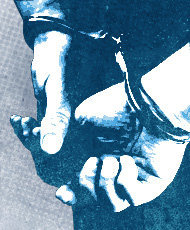
Gate News: Charges against outreach workers dropped
Justice prevailed in Chicago municipal court when charges were dropped against two young men arrested last March 31 while canvassing the Garfield Park neighborhood to encourage residents to sign up for Obamacare. Kevin Tapia (19) and Felip Hernandez (20), community outreach activists with Grassroots Collaborative, were stopped, searched and arrested on charges of “soliciting unlawful business.” Though a judge dismissed the case, unlawful stop and frisk police-tactics are employed by the Chicago Police Department; but how often and in which city neighborhoods remains unverifiable because police contact sheets are not made public. Hernandez and Tapia’s case directed public focus to the controversial, usually racially loaded, policing measure. The ACLU of Illinois advocates for police disclosure of stop and frisk data so that the public has the information needed to assess the use of this policing tactic. ACLU of Illinois staff attorney Lindsay Miller maintains that the Chicago Police Department’s stop and frisk policies result in thousands of unlawful detentions of young male minorities every year.

May 01, 2014
Juvenile Justice Information Exchange: ACLU, Illinois DJJ Move Forward on Remedial Plan
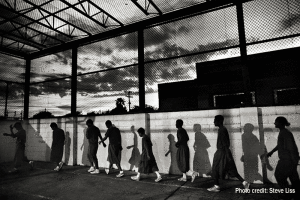
U.S. Judge Matthew Kennelly approved a comprehensive remedial plan to address the issues first raised by the ACLU of Illinois in a 2012 lawsuit against the Department of Juvenile Justice and confirmed by a consent decree signed by both parties in December 2012. The plan establishes parameters and time tables under which the department needs to address issues of confinement, community placement, safety, and how it provides mental health and educational services. ACLU of Illinois staff attorney Lindsey Miller explained that the plan establishes enforceable rations between staff and incarcerated youth and mandates full-day education programs:
Apr 29, 2014
Kankakee Daily Journal: Don’t automatically try juveniles as adults
Legislation now before the Illinois House of Representatives would give state judges the authority to determine whether or not to try juveniles as adults. Current Illinois laws allow prosecutors to automatically transfer juveniles, suspected of committing serious crimes, to adult court to face criminal charges. The ACLU of Illinois consistently maintains that trying youth in adult court has significant negative effects on public safety. The Daily Journal’s opinion piece by John Maki, of the John Howard Association, points out that the decision to charge a seventeen year old, accused of committing a violent crime, as an adult should be decided in court by a judge considering all the details of the case, rather than in the private offices of prosecutors. Maki sites studies which reveal racial disparities that stem from prosecutors’ application of automatic transfers. He argues that Illinois laws should be amended to give youth offenders the opportunity to:
Stay Informed
Sign up to be the first to hear about how to take action.
By completing this form, I agree to receive occasional emails per the terms of the ACLU’s privacy statement.
By completing this form, I agree to receive occasional emails per the terms of the ACLU’s privacy statement.