
News & Commentary
Oct 04, 2023
Fighting to Protect Free Speech
Attempts to limit free speech through censorship have been on the rise in Illinois, requiring that each of us be alert for these attempts in our own community.
Oct 03, 2023
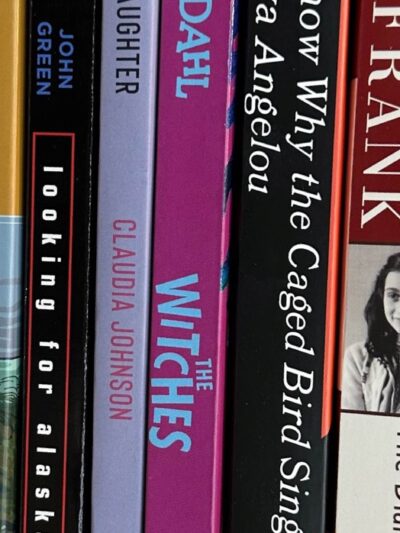
Show Up Against Book Bans
The last two years have seen book bans come roaring back into the public consciousness.
Jan 19, 2021
Federal court finds Illinois anti-panhandling law unconstitutional
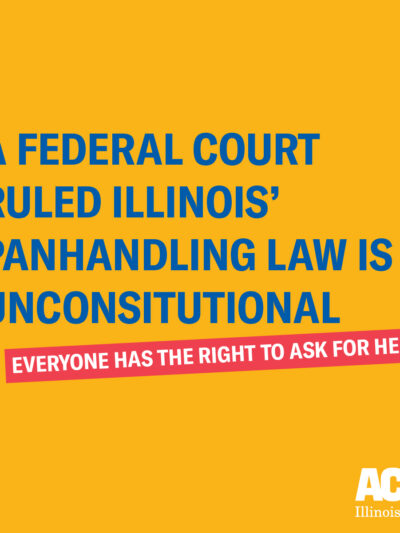
A federal district court judge in Chicago last week struck down a state law prohibiting panhandling in public streets and medians and ordered Illinois State Police not to enforce it. The ruling ends a lawsuit by two men experiencing homelessness who challenged the law. Michael Dumiak and Christopher Simmons sued after they were repeatedly ticketed and fined for asking passing motorists for help at a suburban Chicago intersection, while charities and religious groups collected donations at the same location without consequence. The judge’s ruling resolves the case against the Illinois State Police and the DuPage County State’s Attorney challenging the constitutionality of the statute. Other defendants – the Village of Downers Grove and several of its police officers – recently settled the claims against them and paid damages to Mr. Dumiak and Mr. Simmons after the Village repealed an ordinance similar to the state law. Mr. Dumiak is pleased with the ruling, saying “Some of us are just out here because we need help, especially during this hard time with COVID-19. I can’t find a job right now.” Christopher Simmons, the other plaintiff, passed away late last year. He survived long enough to receive his monetary settlement from the Village of Downers Grove, but not to see the final resolution of the case. Upon receiving the settlement, Mr. Simmons stated, “This feels so great not just for me but for all people who are homeless,” said Christopher Simmons. “This began simply because I needed to ask for help. I’m thankful the federal court recognized I have a right to do that.” “As the court recognized, government may not punish speech requesting personal donations while allowing other speech at the same time and place,” added Rebecca Glenberg, senior staff attorney at the ACLU of Illinois. “Unfortunately, many local governments in Illinois still have anti-panhandling ordinances. Those municipalities are now on notice that they must repeal those laws or risk liability in federal court.” “For years our homeless clients have faced criminal penalties for exercising their First Amendment rights,” said Diane O’Connell, Community Lawyer at the Chicago Coalition for the Homeless. “This decision is one in a line of cases that is finally changing these terrible laws across the United States. No one should face arrest because they ask for help.” Mr. Dumiak and Mr. Simmons were charged under an Illinois statute that makes it a misdemeanor to stand on a median to solicit contributions, employment, business, or rides from passing vehicles. The statute does not prohibit other interactions with drivers and passengers, such as gathering petition signatures or distributing leaflets. It allows municipalities to exempt certain charities from the law, even as local police enforce it against individuals who ask for money for their own use. A 2015 U.S. Supreme Court ruling made it clear that most laws targeting panhandlers are unconstitutional. Although the case (Reed v. Town of Gilbert) was not about panhandling, the Supreme Court clarified that government regulation of speech based on its subject matter or purpose is almost always unconstitutional. Since Reed was decided, panhandling ordinances across the nation have been repealed or struck down by courts. Mr. Dumiak and Mr. Simmons were represented by lawyers for the ACLU of Illinois, the Chicago Coalition for the Homeless (CCH), and the Chicago office of Schiff Hardin.
Nov 02, 2020
ACLU of Illinois Responds to Election Night ‘Security Plans’
The ACLU of Illinois today responded to the City of Chicago’s announcement of a security plan for Election night and beyond. The following can be attributed to Colleen K. Connell, Executive Director of the ACLU of Illinois: “This election season has been extraordinary – marked by millions of Americans waiting for hours to vote early and millions of others voting by mail. Still other Americans have encouraged those waiting to cast their ballot with advocacy, music, dancing and even cookies and pizza. In this difficult time, the American people have come together to fight the pandemic, challenge blatant voter suppression and make their voices heard. These voices will not fall silent on Tuesday. In the wake of the election, millions Americans will continue to exercise free expression – including some who will gather together in the streets of Chicago. Some will celebrate the election’s outcome; others will communicate their disappointment; and still others will want to articulate their vision of policies that make our neighborhoods and our country better. No matter the message, these are voices of Americans who have a yearning and a right to come together and be heard. The City of Chicago recently announced plans for these gatherings after the election. Above all else, any such plan must be based on welcoming all voices on to Chicago’s iconic streets and plazas to share their messages — not on silencing dissent through curfew, restrictions of transportation to and from protests, or policing that harms people. This requirement that government respect the rights of Americans to assemble and speak is embedded in our Constitution, and it is the process for improving our country. Let’s count every vote and then celebrate freedom to assemble and to speak!”

Jul 31, 2020
First Amendment Challenge of Panhandling Restrictions Moves Forward
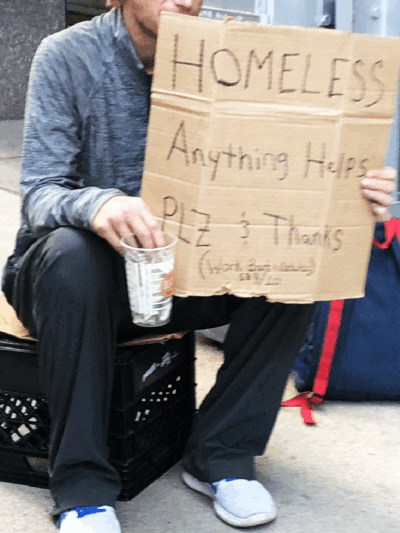
Two men repeatedly ticketed for seeking help to survive from motorists stopped at a Downers Grove intersection can continue their lawsuit against the Village and six individual police officers for violating their rights under the First Amendment, according to U.S. District Court Judge Robert W. Gettleman. The ruling came yesterday in a lawsuit filed by Michael Dumiak and Christopher Simmons in August of 2019.
Jul 20, 2020
ACLU of Illinois Opposes Deployment of Federal Forces in Chicago by the Trump Administration
The below statement can be attributed to Colleen Connell, Executive Director, ACLU of Illinois:
Jul 18, 2020
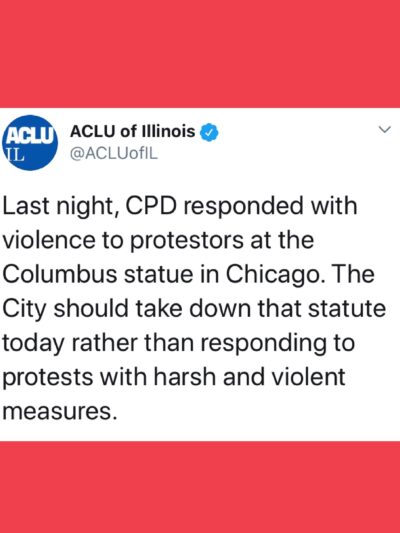
ACLU of Illinois Calls for Accountability and Action after Police Violence in Grant Park
The below statement can be attributed to Colleen Connell, Executive Director, ACLU of Illinois:
Mar 02, 2018
An Open Letter to Illinois Schools
In recent weeks, students of Parkland, Florida, who survived a mass shooting at their school on February 14th, have inspired high school students across the country and here in Illinois with their leadership and courage. Some students are learning for the first time that their voices matter and that by banding together they can affect public policy.

Apr 10, 2016
Statement on media reports of police spying on protest groups
The Chicago Sun Times posted a story this weekend detailing Chicago Police Department activities aimed at monitoring the activities of protest groups, especially African American groups, in the aftermath of the release of the Laquan MacDonald video in November 2015. The Sun Times story describes the CPD making “plans to have undercover officers spy on protest groups.” The following can be attributed to Karen Sheley of the American Civil Liberties Union of Illinois:

Stay Informed
Sign up to be the first to hear about how to take action.
By completing this form, I agree to receive occasional emails per the terms of the ACLU’s privacy statement.
By completing this form, I agree to receive occasional emails per the terms of the ACLU’s privacy statement.