
News & Commentary
Mar 28, 2014
Chicago Sun Times: Hobby Lobby tries to craft religious rights
Chicago Sun-Times columnist Neil Steinberg distills the religious freedom hyperbole surrounding the Hobby Lobby case, now before the U. S. Supreme Court, and synthesizes what the case is really about: a woman’s civil liberties. Hobby Lobby seeks exemption from the Affordable Care Act which mandates employee- health insurance policies cover contraceptives; it maintains that forcing it to comply would violate the religious beliefs of Hobby Lobby owners and share-holders. In a WTTW interview, Colleen Connell, Executive Director of the ACLU of Illinois, argued that religious freedom issues are not applicable “in this instance” because the company is a profit making corporate entity, not a religious organization. Steinberg’s Sun Times column outlines the country’s historical social progress which, over time, has mitigated the power of employers to control the private lives of their workers and pairs that reality against Hobby Lobby’s oral arguments before the court. Switching religious labels Steinberg surmised:

Mar 24, 2014
WTTW: IL Supreme Court Strikes Down Eavesdropping Law
Legal Director Harvey Grossman appeared on WTTW’s Chicago Tonight to discuss the Illinois Supreme Court ruling that struck down the Illinois Eavesdropping Law. You can watch the segment below:

Mar 24, 2014
Chicago Tribune: Illinois eavesdropping law struck down as unconstitutional
On Thursday, an Illinois Supreme Court ruling in People v. Melongo struck down the decades-old eavesdropping law, ruling it as unconstitutional. The law prohibited any citizen from making an audio recording of a conversation deemed as private without getting prior consent from all parties involved with a violation resulting in a felony charge. The ACLU of Illinois had criticized the law as a violation of the First Amendment. In 2010, the ACLU of Illinois challenged the eavesdropping law as it applied to the audio recording of police officers, in the lawsuit ACLU v. Alvarez. The Chicago Tribune writes:
Mar 18, 2014
Associated Press: Illinois offers plan to fix youth detention issues
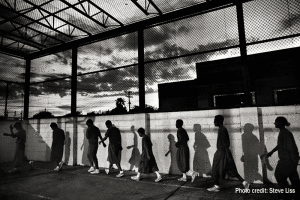
The Associated Press has an article about the remedial plan to improve conditions in six juvenile justice facilities in Illinois. The plan, released yesterday, comes as a result of a joint settlement reached by the ACLU of Illinois and the Illinois Department of Juvenile Justice. The ACLU of Illinois filed a lawsuit in 2012 on behalf of detained youth to address substandard conditions in the facilities. The remedial plan outlines five areas of improvement including education, mental health treatment, idleness, solitary confinement, community placement, and resources for LGBT youth. The Associated Press spoke with the ACLU of Illinois’ Adam Schwartz about the issue of inadequate staffing:
Mar 17, 2014
Chicago Daily Law Bulletin: Search starts for new youth facility head
A search to select a new superintendent for the Juvenile Temporary Detention Center (JTDC) will begin soon, The Chicago Daily Law Bulletin reports. After an ACLU lawsuit claiming substandard conditions and lack of services for youth detained in the facility, the county entered into an agreement in 2002 to monitor its improvement. Earl Dunlap was hired in 2007 to oversee the facility, but now as a result of a change in state law, Cook County Chief Circuit Judge Timothy C. Evans is tasked with finding his replacement.

Mar 17, 2014
The Chicago Tribune: Pact calls for better conditions for imprisoned juveniles
The Chicago Tribune published an article about a plan that outlines areas of improvement to address substandard conditions within juvenile justice facilities throughout Illinois. The proposed remedial plan, released today and filed in a district court late last week, defines five problem areas within six facilities across the state. Those areas include education, mental health treatment, idleness, solitary confinement, community placement, and rights of LGBT youth who are detained. The plan comes as a result of a settlement between the Illinois Department of Juvenile Justice and detained youth represented by the ACLU of Illinois.
Mar 12, 2014
The Redeye: Chicago lawsuit filed as legislators debate revenge porn
An Illinois lawsuit, filed by a humiliated ex-wife, raises constitutional questions about privacy and free speech over what should be allowed to be posted on the internet. The wife claims her ex-husband caused her embarrassment and emotional harm by maliciously posting on the internet intimate pictures taken when they were still a couple. Illinois, and a number of other states across the country, are considering legislation to criminalize the tactics. The ACLU of Illinois is concerned that language of proposed Illinois legislation, as now written, could limit First Amendment rights:

Mar 05, 2014
Chicago Sun-Times: Lisa Madigan: Illinois counties can allow same-sex marriages now
The February 28th unequivocal ruling by Federal Judge Sharon Johnson Coleman that Illinois’ current ban on the freedom to marry for same sex couples is unconstitutional has set off a statewide review at the county level. Cook Count Clerk David Orr’s office immediately began to issue marriage licenses without gender discrimination. Champaign County quickly did the same. The question, since the court ruled, has been whether other county clerks would continue to enforce a ban that a federal court has found to be unconstitutional.
Mar 04, 2014
Chicago Tribune: Clerk issues more than 250 marriage licenses to same sex couples
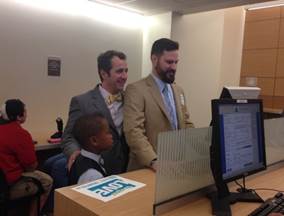
Two hundred and fifty marriage licenses were issued to same sex couples in the week immediately following the ACLU of Illinois and Lambda’s successful federal court petition which led to Judge Sharon Johnson Coleman’s ruling granting marriage equality in Cook County. Marriage licenses application numbers, released by Cook County Clerk David Orr, for the week of February 21 through the 28, show the divergence of professional backgrounds of the applicants as well as a breakdown by gender and residency. More than half of the same sex applicants granted licenses live in Chicago or in one of 55 suburban communities. A dozen couples live in other states including Kentucky, South Carolina and Texas.
Stay Informed
Sign up to be the first to hear about how to take action.
By completing this form, I agree to receive occasional emails per the terms of the ACLU’s privacy statement.
By completing this form, I agree to receive occasional emails per the terms of the ACLU’s privacy statement.