
News & Commentary
Mar 02, 2015
Chicago Tribune: State eyes more secure driver's license to avoid flying restrictions
The Chicago Tribune talked to ACLU of Illinois Communications and Public Policy Director Ed Yohnka about the Real ID Act - a law which was passed in 2005 in light of 9/11. In an effort to combat terrorism by enforcing air travel restrictions, the Real ID Act requires state-issued identification cards to meet certain criteria. A key requirement mandated by the Real ID Act is birth certificate verification, which Illinois currently does not require. The article approximates that an estimated $3.75 million a year would be needed to implement birth certificate verification and to set up a database to store all of the information, which could be shared across state lines. The ACLU has opposed Real ID, citing a range of concerns including costly administrative burdens on state governments, its ineffectiveness against terrorism, increased security risks and threats to privacy. Ed Yohnka told the Chicago Tribune:

Mar 02, 2015
WBBM 780: Increased Use Of License Plate Cameras Draws Scrutiny
WBBM-AM 780 spoke with ACLU Attorney Adam Schwartz about a new measure which would regulate the use of automatic license plate readers (ALPRs) by Illinois law enforcement. ALPRs are mounted camera devices used in police cars to scan the license plates on every car in its vicinity. The information collected by the devices are stored in databases and are often used to locate stolen vehicles. However, the ACLU is concerned that ALPRs can be another method for unwarranted surveillance of law-abiding motorists. Schwartz stated:

Feb 23, 2015
Chicago Sun-Times Editorial: What to do when cop cameras track your every move
The Chicago Sun-Times published an editorial about a measure introduced in the Illinois General Assembly that would place modest regulations on the use of automatic license plate readers (ALPRs) by law enforcement. ALPRs are mounted camera devices used in police cars to scan the license plate number of every car in its vicinity. The bill, which the ACLU of Illinois drafted and is sponsored by State Senator Daniel Biss, would create guidelines for their use including how the data collected is stored. While ALPRs are helpful to police in tracking stolen vehicles, they are also powerful surveillance tools that have the potential to infringe on the privacy rights of law-abiding Illinois motorists.

Feb 02, 2015
ACLU of Illinois explains opposition to new cyber-bullying law
The Chicago Tribune published an article about a new law which will set Illinois public schools to task in investigating and helping students who are cyber-bullied. In the days following the law's enactment, a downstate school district administrator circulated a message stating that schools may require the students to turn over their social media passwords. Misinformation then began to spread about the new law regarding whether or not schools can demand students to provide their passwords. The new law does not permit this. The ACLU of Illinois has a history of supporting anti-bullying measures for students, but opposed this measure, since it could potentially punish students for acts which happen outside of school. The Chicago Tribune spoke with communications and public policy director Ed Yohnka:

Dec 22, 2014
The News-Gazette: Body cams: A new view
In the wake of the police shootings in Ferguson, MO and Staten Island, NY, the issue of police body cameras has come into public conversation as a potential means to create transparency and to safeguard against police misconduct. The Champaign county town of Rantoul, IL recently equipped their police force with body cameras, having tested and trained their department on the technology for over a year before they began using them in November. This September, the ACLU of Illinois published suggested guidelines on the use of police body cameras which outline areas of concern ranging from basic privacy protections for the police wearing them, when and where police can turn the device on and off, and storage protocols for the video files once they are recorded. The News-Gazette spoke with ACLU of Illinois communications and public policy director Ed Yohnka on the use of body cameras by law enforcement.
Dec 12, 2014
WBEZ: What does the amended Illinois eavesdropping bill mean for citizens?
ACLU of Illinois senior staff counsel Adam Schwartz was interviewed on the WBEZ program "Morning Shift" about the measure passed in the Illinois General Assembly last week. The bill aims to replace the Illinois Eavesdropping Act, which was ruled unconstitutional by the Illinois Supreme Court last Spring. The new measure will allow for the audio recording of public officials doing their public duty in a public place, but will require a warrant or all-party consent for any conversation deemed to have a reasonable expectation of privacy. The ACLU of Illinois opposed the measure because it allows too many exceptions to law enforcement for instances where they would be allowed to record private conversations without obtaining a warrant. You can listen to the segment below:
Dec 10, 2014
ACLU talks to WBEZ about Stingrays
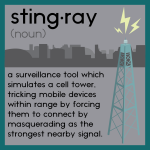
Communications and Public Policy Director Ed Yohnka discussed the ACLU's concerns with the use of "stingray" technology by the Chicago Police Department (CPD) in a recent segment on WBEZ. Stingrays operate by mimicking a cellphone tower, and have the ability to access their owner's locations and other identifying information. Given the potential threat to privacy that the use of such technology by law enforcement has had in other states, the ACLU of Illinois will continue monitor the issue. Ed Yohnka stated:
Sep 25, 2014
Getting it right on police body cameras
As police departments nationwide, including the Chicago Police Department, move swiftly to adopt body cameras to record interactions between officers and civilians, we should pause. It would be unwise to deploy this new technology without instituting some basic privacy protections for the man on the street.

Sep 17, 2014
Progress Illinois: Privacy And Safety A Concern As Illinois Considers Police Body Cameras
Progress Illinois posted an article about the ACLU of Illinois' recommended guidelines on the use of body cameras by law enforcement in Illinois. In the wake of the events in Ferguson, Missouri and the police shooting death of an unarmed teenager, law enforcement agencies across the country have expressed interest in the use of body cameras to encourage transparency and accountability in the oversight of police forces. The guidelines, released last week, outline numerous privacy concerns that need to be weighed before any implementation can begin. Yohnka stated:
Stay Informed
Sign up to be the first to hear about how to take action.
By completing this form, I agree to receive occasional emails per the terms of the ACLU’s privacy statement.
By completing this form, I agree to receive occasional emails per the terms of the ACLU’s privacy statement.