
News & Commentary
Jan 14, 2015
When else can government regulate the time, place, and manner of protest?
Back to Overview of Report

Jan 07, 2015
WBBM 780: ACLU: Racial Disparity In Traffic Stops Still A Problem
Radio station WBBM 780 aired a segment about the recent ACLU of Illinois study that found significant racial disparity in traffic stops and resulting searches by the Chicago Police Department (CPD). The report found that the rate of black drivers being stopped (46%) was far higher than the rate of black residents in the city population (32%). The report also found that the rates of black and Latino drivers being stopped in white neighborhoods were even more disproportionate to their population rate. WBBM spoke with senior staff counsel Adam Schwartz:

Dec 22, 2014
The News-Gazette: Body cams: A new view
In the wake of the police shootings in Ferguson, MO and Staten Island, NY, the issue of police body cameras has come into public conversation as a potential means to create transparency and to safeguard against police misconduct. The Champaign county town of Rantoul, IL recently equipped their police force with body cameras, having tested and trained their department on the technology for over a year before they began using them in November. This September, the ACLU of Illinois published suggested guidelines on the use of police body cameras which outline areas of concern ranging from basic privacy protections for the police wearing them, when and where police can turn the device on and off, and storage protocols for the video files once they are recorded. The News-Gazette spoke with ACLU of Illinois communications and public policy director Ed Yohnka on the use of body cameras by law enforcement.
Dec 18, 2014
"I'm Still Gonna Be Me": Leading the Charge for Change in Prisons and Everywhere Else
I first met Tatyana a few years after the Wisconsin legislature passed the Inmate Sex Change Prevention Act – a cruel piece of legislation aimed at denying urgently needed healthcare to any transperson in custody in Wisconsin.
Dec 15, 2014
Chicago Tribune Letter to the Editor: Report on torture is worthy of publication
To the editor:
Dec 12, 2014
WBEZ: What does the amended Illinois eavesdropping bill mean for citizens?
ACLU of Illinois senior staff counsel Adam Schwartz was interviewed on the WBEZ program "Morning Shift" about the measure passed in the Illinois General Assembly last week. The bill aims to replace the Illinois Eavesdropping Act, which was ruled unconstitutional by the Illinois Supreme Court last Spring. The new measure will allow for the audio recording of public officials doing their public duty in a public place, but will require a warrant or all-party consent for any conversation deemed to have a reasonable expectation of privacy. The ACLU of Illinois opposed the measure because it allows too many exceptions to law enforcement for instances where they would be allowed to record private conversations without obtaining a warrant. You can listen to the segment below:
Dec 11, 2014
Chicago Tribune: Harsh Treatment - How Illinois fails its most vulnerable citizens
The Chicago Tribune has an editorial that builds on its investigative series "Harsh Treatment," which looks at the failure of the Illinois Department of Child and Family Services (DCFS) to care for children placed in treatment centers across the state. For the past 20 years, the ACLU of Illinois has been involved in litigation to improve care and services for children in DCFS custody. Although the number of children in DCFS custody has declined over the years, it is clear from the Tribune's reporting that the quality of care and services provided to them is on the decline.
Dec 10, 2014
ACLU talks to WBEZ about Stingrays
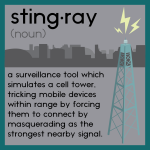
Communications and Public Policy Director Ed Yohnka discussed the ACLU's concerns with the use of "stingray" technology by the Chicago Police Department (CPD) in a recent segment on WBEZ. Stingrays operate by mimicking a cellphone tower, and have the ability to access their owner's locations and other identifying information. Given the potential threat to privacy that the use of such technology by law enforcement has had in other states, the ACLU of Illinois will continue monitor the issue. Ed Yohnka stated:
Stay Informed
Sign up to be the first to hear about how to take action.
By completing this form, I agree to receive occasional emails per the terms of the ACLU’s privacy statement.
By completing this form, I agree to receive occasional emails per the terms of the ACLU’s privacy statement.