News & Commentary
Mar 11, 2021
Illinois: Repeal Forced Parental Notice of Abortion
Law Violates Young People’s Human Rights, Can Delay Their Care
Jan 22, 2021
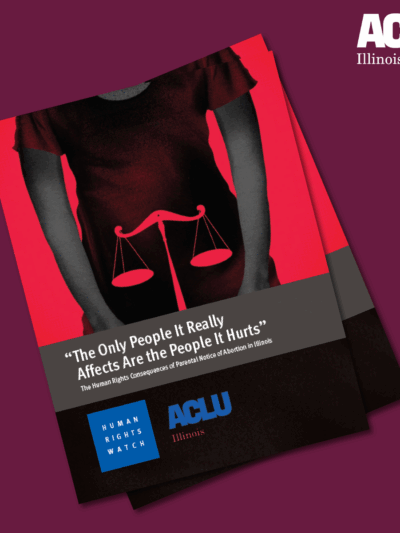
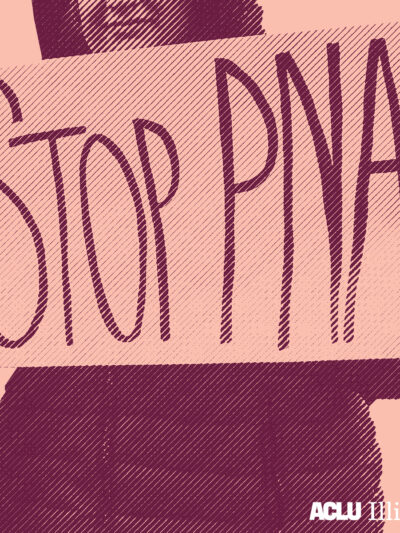
PNA is Not Okay
Today we mark 48 years since the Supreme Court’s landmark ruling in Roe v. Wade, which affirmed an individual’s right to determine their own future by deciding whether and when to become a parent. Two years ago, Governor J.B. Pritzker pledged to make Illinois a national leader in protecting the right to access reproductive health care. Yet still there are youth in Illinois who are forced to appear in front of a judge and seek approval to control their own reproductive health care.
Sep 30, 2020
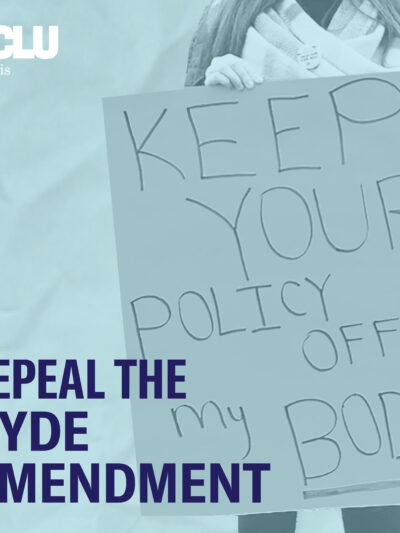
It’s Well Past Time to Repeal the Hyde Amendment
The country is closely watching the Supreme Court, wondering what Justice Ruth Bader Ginsburg’s death means for the future of Roe v. Wade and the right to access abortion care. It is important to remember, however, that many people already live in, for all practical purposes, what is a post-Roe world. Depending on where someone lives in the country, their ability to access abortion care may be legal, but limited by real-world obstacles like their ability to pay for care.
Jul 13, 2020
Religious Freedom Is Not a License to Deny Employees Birth Control Coverage
In early July, the U. S. Supreme Court upheld a Trump Administration rule that allows virtually any employer in the country to claim a religious or moral exemption in order to opt out of having to provide birth control coverage for employees. Every lower court to decide this issue found that the White House did not have authority to issue these harmful rules, which also apply to universities. It’s an extremely disappointing decision that undermines what Congress intended when it adopted the Affordable Care Act a decade ago. Congress meant for birth control to be provided at no cost under most health care plans. That coverage was a game-changer for people across the country. The Supreme Court’s decision creates the potential for a lot of people to lose this critical coverage.

Jun 29, 2020
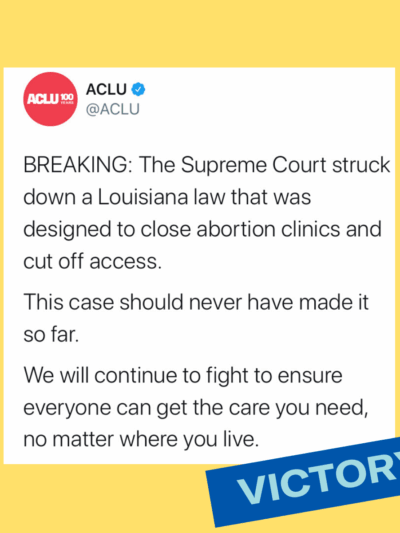
ACLU of Illinois Reacts to U.S. Supreme Court Striking Down Unconstitutional Abortion Ban in Louisiana
This morning, the U.S. Supreme Court struck down a Louisiana law requiring abortion providers to have admitting privileges at nearby hospitals, finding that it imposed an unconstitutional restriction on access to the procedure.
Jun 25, 2020
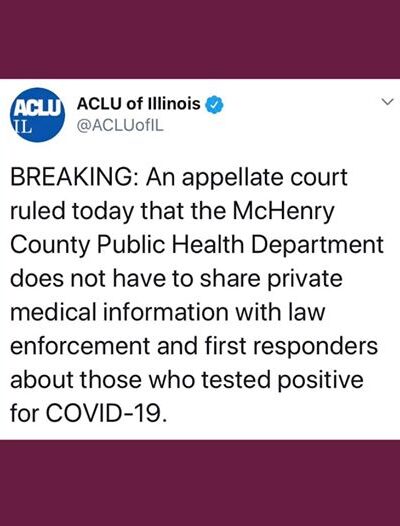
ACLU of Illinois and LULAC Respond to Court Order Stopping McHenry County from Sharing Private Medical Information
Earlier today, a unanimous panel of the Illinois Appellate Court for the Second District lifted an order mandating the McHenry County Public Health Department to share information about residents of the County who test positive for COVID-19 with law enforcement and other first responders. The ACLU of Illinois recently filed an amicus brief in this matter on behalf of the League of United Latin American Citizens of Illinois (LULAC), the Illinois Coalition for Immigrant and Refugee Rights (ICIRR) and the Health and Medicine Policy Research Group (HMPRG). The ACLU of Illinois and LULAC issued the following statements in response to the ruling: Ameri Klafeta, Women’s and Reproductive Rights Project Director, ACLU of Illinois:“The appellate court’s action today stops a violation of privacy and advances public health. Public health officials have been clear that stigmatizing people by including them on law enforcement and other first responder lists discourages testing and treatment. The ruling paves the way for everyone in McHenry County to be tested and seek treatment for COVID-19. This is our pathway out of the pandemic.” Maggie Rivera, Illinois State Director, LULAC:“This will be met as a great relief by undocumented families and families with mixed immigration status – with U.S. citizens, legal residents and undocumented individuals all under the same roof – in McHenry County. Many of these people already live in fear a loved one being swept up in an immigration raid. They should not fear seeking medical care.”
Jun 18, 2020
Groups Encourage Court to Block Sharing of Private Medical Information with Law Enforcement in McHenry County
The League of United Latin American Citizens of Illinois (LULAC), the Illinois Coalition for Immigrant and Refugee Rights (ICIRR) and the Health and Medicine Policy Research Group (HMPRG) today asked an Illinois appellate court to block the forced sharing of private medical information about McHenry County residents who have tested positive for COVID-19 with law enforcement and other first responders. The groups’ brief comes after a Circuit Court judge earlier sided with the law enforcement agencies to require sharing of this private medical information and denied a request by the McHenry County Health Department to reconsider that ruling. LULAC, ICIRR and Health and Medicine Policy Research Group oppose the release of this personal medical information as a violation of their members’ rights to keep their health information private, and as ultimately harmful – not helpful - to the health interests that some claim to be the reason for sharing the data. The amicus brief filed late yesterday argues specifically that the release of names or addresses of people who test positive for COVID-19 undermines the basic precepts of public health, and has a dangerous and stigmatizing impact on members of vulnerable communities, discouraging many in McHenry County from seeking testing and treatment in the midst of the pandemic. The three groups are being represented in this action by the ACLU of Illinois. The brief notes that if names of those who have tested positive for COVID-19 will end up in the hands of law enforcement and other first responders, many community residents will avoid seeking health care, including testing for COVID. The fact is that some will eschew testing and treatment if private medical information is shared, undermining public health efforts designed to protect all residents of McHenry County. “Undocumented families and families with mixed immigration status – with U.S. citizens, legal residents and undocumented individuals all under the same roof – already live in fear a loved one being swept up by the Trump Administration and fast-tracked for deportation,” added Maggie Rivera of LULAC Illinois and a McHenry County resident. “This is exacerbated by the self-defeating efforts of McHenry police officers who want to create an ineffective list for misguided purposes. We hope the appeals court will block this practice before it creates real harm.” Public health officials oppose the sharing of this information as well – the Illinois Department of Public Health urges that first responders treat every member of the public as potentially infectious given that many people are most contagious in the days before they suspect they may have the virus and can be tested. Moreover, Centers for Disease Control and Prevention guidelines advise first responder dispatchers to pose questions to those seeking EMS services to assess specific risks associated with responding to that call. Public health experts also note that protecting the confidentiality of medical information is essential to ensuring that people access needed medical care for appropriate diagnosis and treatment. “Sharing personal medical information for those infected with the virus with law enforcement stands in stark contrast to good public health policy and effective public health practice” says Ameri Klafeta of the ACLU of Illinois. “The pathway out of this pandemic is not through shortcuts and simple solutions. We should respect the personal medical privacy of our neighbors and continue our support for policies that will encourage people to get tested and to help us stem the spread of the disease.” “Many of our members come from countries and backgrounds where being on a government list is an invitation for stigmatization and discrimination,” added Fred Tsao, policy director at ICIRR. “Being in the United States was supposed to be the end of this sort of behavior, not a continuation. A global pandemic should be a time to put aside this self-defeating idea and seek the public health. Law enforcement in McHenry County needs to hear that message.” “Best practice in public health demands that first responders assume all people they are called to attend to may be COVID positive,” added Margie Schaps, executive director of the Health & Medicine Policy Research Group. “To provide personal medical information only on those who test positive could lull the responders into false complacency about everyone else. This puts the health of the first responders at risk as it unnecessarily invades people’s medical privacy.”
May 20, 2020
Abortion Care is an Essential Service – We’ll Keep Fighting to Defend It
A simple truth of the past few years is that ideological anti-abortion forces will use any excuse, any opportunity and any misinformation to advance their cause. Pushing legislation based on faulty, even non-existent, science? No problem. A single anecdote or news story taken out of context? Push reckless state legislation designed to invite our nation’s Supreme Court to strike down the fundamental holding in Roe v. Wade.
May 10, 2020
This Mother's Day, Let's Fight for Paid Sick Leave for Working Mothers
Today is Mother’s Day. Across the State of Illinois, many of us will contact our own mother – perhaps via Zoom this year – and others will remember mothers no longer with us. Like every year, we will discuss how much we love mothers and how important they are to our individual lives and to our society.
Stay Informed
Sign up to be the first to hear about how to take action.
By completing this form, I agree to receive occasional emails per the terms of the ACLU’s privacy statement.
By completing this form, I agree to receive occasional emails per the terms of the ACLU’s privacy statement.