
News & Commentary
May 26, 2020
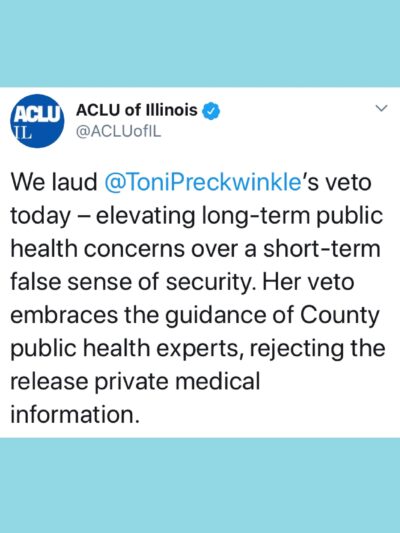
ACLU Applauds President Preckwinkle’s Veto of Cook County Board Resolution Forcing the Release of Private Medical Information
The below statement can be attributed to Colleen Connell, Executive Director, ACLU of Illinois:
May 21, 2020
ACLU of Illinois Opposes Cook County Board Resolution Forcing the Release of Private and Confidential Medical Information
In response to a proposed Cook County Board resolution compelling the disclosure of private health information to law enforcement and other first responders against the recommendation of public health experts, the ACLU of Illinois submitted testimony today strongly opposed to the measure. In testimony to the Commissioners, Executive Director Colleen Connell warned the board that sharing private medical information – the identities of all people in Cook County who have tested positive for COVID-19 – would undermine public health, increase the risk of spreading the virus, and violate federal and state legal protections.

May 20, 2020
Abortion Care is an Essential Service – We’ll Keep Fighting to Defend It
A simple truth of the past few years is that ideological anti-abortion forces will use any excuse, any opportunity and any misinformation to advance their cause. Pushing legislation based on faulty, even non-existent, science? No problem. A single anecdote or news story taken out of context? Push reckless state legislation designed to invite our nation’s Supreme Court to strike down the fundamental holding in Roe v. Wade.
May 20, 2020
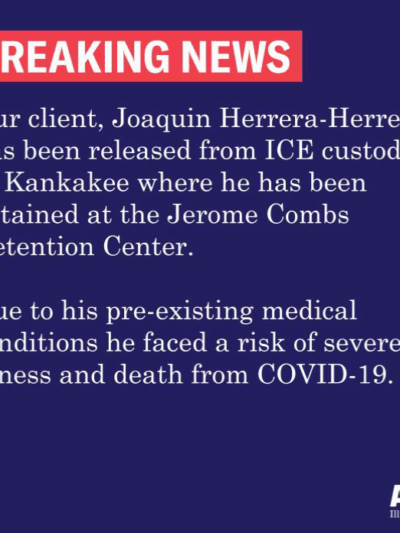
Medically Vulnerable Immigrant Ordered Released from ICE Custody at Jail in Kankakee County
A federal court ordered a man released from ICE custody at the Kankakee County Jail late last night. The action follows a lawsuit filed late last week.
May 15, 2020
Local Hispanic Group Seeks to Protect Personal Medical Information from Law Enforcement in McHenry County During COVID-19 Crisis
LULAC of Illinois, part of the largest and oldest Hispanic civil rights organization in the United States, wants to represent the voice of its members from McHenry County in a lawsuit that will determine whether private medical information about residents will be shared by the County public health department with law enforcement. LULAC told the Circuit Court of McHenry County in a filing earlier this week that the release of names and addresses of people who test positive for COVID-19 will undermine the basic precepts of public health, and have a dangerous and stigmatizing impact on members of the Hispanic community, discouraging many in McHenry County from seeking testing and treatment in the midst of the pandemic.

May 15, 2020
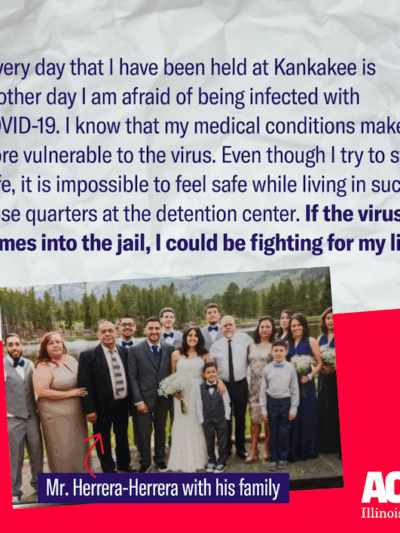
Medically Vulnerable Man Held by ICE in Kankakee Asks Court for Release, Fearing Potentially Lethal COVID-19
Joaquin Herrera-Herrera, a 60-year-old man detained by ICE on pending immigration proceedings since February, yesterday asked a federal court to release him from the Jerome Combs Detention Center (JCDC) in Kankakee because his age and underlying health conditions make him vulnerable to serious complications and death from COVID-19. Mr. Herrera-Herrera came to the United States at age six, and has resided in the Chicago area for almost his entire life. As a business owner, he placed and serviced vending machines in restaurants and medical offices for decades, providing for his three children and – before his detention – acting as caregiver for his grandson for more than six years.
May 13, 2020
Another Medically Vulnerable Immigrant Ordered Released from ICE Custody at McHenry County Jail
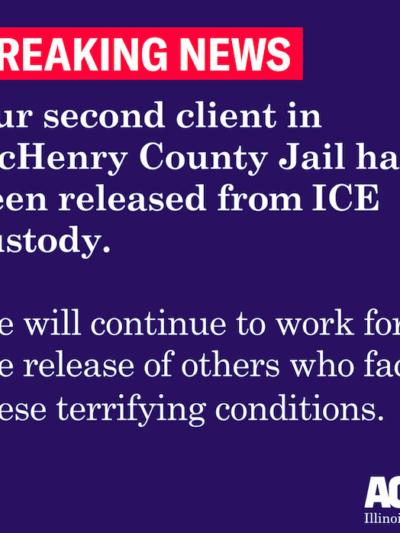
Today, another man was released from ICE custody following a Monday ruling by U.S District Court Judge Rebecca Pallmeyer that he was likely to succeed in showing that conditions in the McHenry County Jail placed him at risk of severe illness and death from COVID-19. The detainee is represented by the ACLU of Illinois, the American Civil Liberties Union, and Faegre Drinker Biddle and Reath LLP in litigation in federal district court in Chicago. The lawsuit, Dembele v. Prim, was filed on behalf of two detainees of U.S. Immigration and Customs Enforcement (“ICE”) who suffer from medical conditions recognized to heighten the risk of severe complications and death from COVID-19. It sought release of these individuals because crowded and unsanitary conditions in the McHenry County Jail failed to protect them from the disease and to enable them to protect themselves in violation of due process. The other man in the lawsuit was released in April, days after the suit was filed. Reacting to the news of the release, Nusrat Jahan Choudhury, legal director for the ACLU of Illinois, issued the following statement: “We are pleased the federal court recognized that our client was likely to succeed in showing that conditions in the McHenry County Jail placed him at risk of severe illness and death from COVID-19. Both of the people we represented in this lawsuit have been released. But detention facilities remain vectors of coronavirus, and many other medically vulnerable people remain in Illinois’ ICE facilities fearing they will be the next victim of COVID. We will continue to work for the release of others who face these terrifying conditions.”
May 10, 2020
This Mother's Day, Let's Fight for Paid Sick Leave for Working Mothers
Today is Mother’s Day. Across the State of Illinois, many of us will contact our own mother – perhaps via Zoom this year – and others will remember mothers no longer with us. Like every year, we will discuss how much we love mothers and how important they are to our individual lives and to our society.
Apr 22, 2020
It’s Time for Illinois to Take the Next Step on Harsh Drug Possession Laws
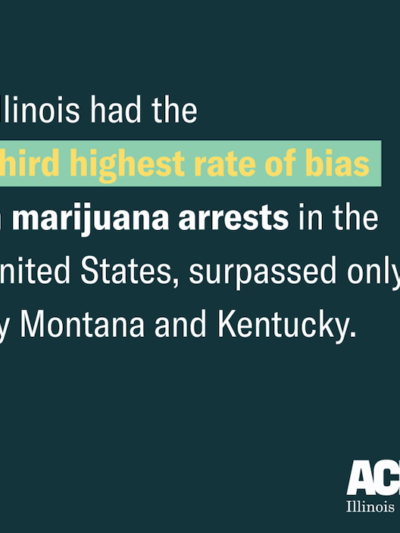
This week, the ACLU released a new update to a 2013 report on the cost of cannabis enforcement across the United States, both in terms of costs and the impact on individual lives. Unsurprisingly, the report shows that the war on cannabis rages on: nationally, law enforcement made more than 6.1 million cannabis-related arrests from 2010 to 2018 - more arrests than for all violent crimes combined. These arrests eat up an enormous amount of resources from law enforcement and the criminal legal system and fall most heavily on people of color.
Stay Informed
Sign up to be the first to hear about how to take action.
By completing this form, I agree to receive occasional emails per the terms of the ACLU’s privacy statement.
By completing this form, I agree to receive occasional emails per the terms of the ACLU’s privacy statement.