
Effort launched to overhaul unfair state forfeiture laws
February 13, 2017 8:30 am
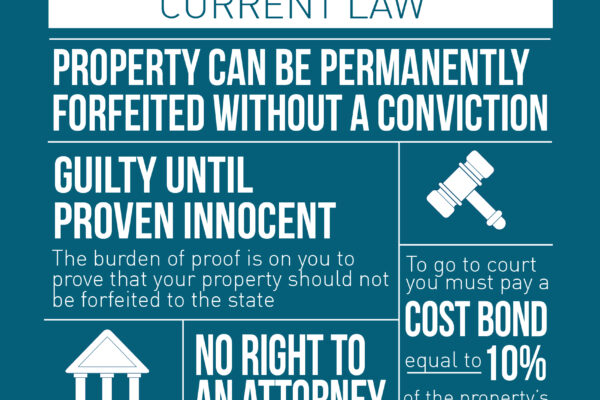
CHICAGO – A system that takes an average of $30 million annually from Illinois residents, often without a charge or a conviction, is being targeted for legislative reform in Springfield. Seeking to ensure that property is never forfeited in Illinois without a criminal conviction, Representative Guzzardi and Senator Harmon filed House Bill 689 and Senate Bill 1578 to overhaul state forfeiture laws. Both bills have bipartisan support across the General Assembly. The ACLU is leading the charge for civil asset forfeiture reform in Illinois – we are hopeful that lawmakers in Springfield will pass legislation this session.
Just last week, President Trump endorsed the practice as part of reinvigorating the discredited “War on Drugs,” going so far as inviting a visiting sheriff to call out a Texas lawmaker seeking to reform civil asset forfeiture in that state.
“House Bill 689 and Senate Bill 1578 are critical pieces of legislation that provide common sense reforms to protect Illinoisans,” said Ben Ruddell, Director of the Criminal Justice Reform Project at the ACLU of Illinois.
Between 2005 and 2015, law enforcement extracted over $300 million in cash and property from Illinois residents, according to a report issued by the ACLU of Illinois and the Illinois Policy Institute last November. Under current state law, property can be permanently forfeited without a person being convicted or even charged with a crime.
The legislation introduced today would reform civil asset forfeiture laws to ensure that a criminal conviction is required before property can be permanently forfeited to the government. This legislation also makes the system more fair – requiring that the government prove the owner of the property was actually involved in criminal activity, rather than forcing the owner to prove their innocence. The bills would also eliminate the incentives that encourage law enforcement agencies to maximize the use of forfeiture for their own financial benefit. Finally, the bills ensure greater transparency around how much property the government takes through forfeiture, and how it uses the proceeds.
“Illinois should follow the lead of numerous other states’ legislatures that have recently overhauled their forfeiture laws,” added Ruddell. “Enacting these common sense reforms will help ensure that asset forfeiture is used only for legitimate law enforcement purposes, and never as an instrument of ‘policing for profit.’”
Related Content

Civil Asset Forfeiture


Asset Forfeiture in Illinois

ACLU of Illinois and Legislative Sponsors Celebrate the Signing of Civil Asset Forfeiture Reform (HB 303)
Stay Informed
Sign up to be the first to hear about how to take action.
By completing this form, I agree to receive occasional emails per the terms of the ACLU’s privacy statement.
By completing this form, I agree to receive occasional emails per the terms of the ACLU’s privacy statement.