
News & Commentary
Dec 15, 2014
Chicago Tribune Letter to the Editor: Report on torture is worthy of publication
To the editor:

Dec 12, 2014
WBEZ: What does the amended Illinois eavesdropping bill mean for citizens?
ACLU of Illinois senior staff counsel Adam Schwartz was interviewed on the WBEZ program "Morning Shift" about the measure passed in the Illinois General Assembly last week. The bill aims to replace the Illinois Eavesdropping Act, which was ruled unconstitutional by the Illinois Supreme Court last Spring. The new measure will allow for the audio recording of public officials doing their public duty in a public place, but will require a warrant or all-party consent for any conversation deemed to have a reasonable expectation of privacy. The ACLU of Illinois opposed the measure because it allows too many exceptions to law enforcement for instances where they would be allowed to record private conversations without obtaining a warrant. You can listen to the segment below:

Dec 11, 2014
Chicago Tribune: Harsh Treatment - How Illinois fails its most vulnerable citizens
The Chicago Tribune has an editorial that builds on its investigative series "Harsh Treatment," which looks at the failure of the Illinois Department of Child and Family Services (DCFS) to care for children placed in treatment centers across the state. For the past 20 years, the ACLU of Illinois has been involved in litigation to improve care and services for children in DCFS custody. Although the number of children in DCFS custody has declined over the years, it is clear from the Tribune's reporting that the quality of care and services provided to them is on the decline.
Dec 10, 2014
ACLU talks to WBEZ about Stingrays
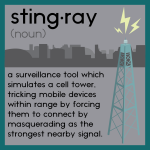
Communications and Public Policy Director Ed Yohnka discussed the ACLU's concerns with the use of "stingray" technology by the Chicago Police Department (CPD) in a recent segment on WBEZ. Stingrays operate by mimicking a cellphone tower, and have the ability to access their owner's locations and other identifying information. Given the potential threat to privacy that the use of such technology by law enforcement has had in other states, the ACLU of Illinois will continue monitor the issue. Ed Yohnka stated:
Dec 09, 2014
Pardoning Not Just the Rich and Famous
Mark Wahlberg is already a famous movie star, but now he wants to expand that star power into the restaurant business.

Dec 08, 2014
Associated Press: Eavesdropping bill focuses on ‘private’ dialogue
This past week, both chambers of the Illinois General Assembly passed a measure that closes loopholes in Illinois' eavesdropping law, the Associated Press reports. The ACLU of Illinois has a history of fighting for the First Amendment right to make an audio recording of public officials performing a public duty in a public place -- in ACLU v. Alvarez-- which had been illegal under what had been the strictest eavesdropping law in the country. In 2012, an appellate court ruled to allow the recording of public officials for ACLU purposes. Then in January, the eavesdropping law went to trial before the Illinois Supreme Court, which ruled the whole of the law to be unconstitutional. The bill clarifies any remaining ambiguity in the current eavesdropping law by restoring two-party consent, but also exempts police from having to obtain a warrant prior to eavesdropping for certain types of crimes:
Dec 05, 2014
Pregnant and wanting to work
Peggy Young’s request wasn’t outrageous.The Maryland woman delivered packages for U

Dec 05, 2014
Protecting Illinois Children
The Chicago Tribune is currently running (beginning December 3 and 4, 2014) a series of front-page stories exploring the cruelty and neglect children experience in some of the residential treatment centers in Illinois. Many of the children featured in the stories are placed in these residential treatment centers under a contract with the Illinois Department of Children and Family Services.
Dec 02, 2014
New York Times: Case Seeking Job Protections for Pregnant Women Heads to Supreme Court
The New York Times has an article about the case before the U.S. Supreme Court regarding a UPS employee who was placed on unpaid leave because she was pregnant. Peggy Young was denied accommodations that would have enabled her to work despite a heavy-lifting restriction recommended by her doctor. Young previously sued UPS for violating the Pregnancy Discrimination Act of 1978--losing twice in district court and the Fourth Circuit Court of Appeals which both affirmed UPS' "pregnancy-blind" policy. The ACLU of Illinois recently helped to draft and successfully pass legislation that requires employers in the state to provide reasonable accommodations to pregnant workers. The case before the Supreme Court is expected to be heard this week.

Stay Informed
Sign up to be the first to hear about how to take action.
By completing this form, I agree to receive occasional emails per the terms of the ACLU’s privacy statement.
By completing this form, I agree to receive occasional emails per the terms of the ACLU’s privacy statement.