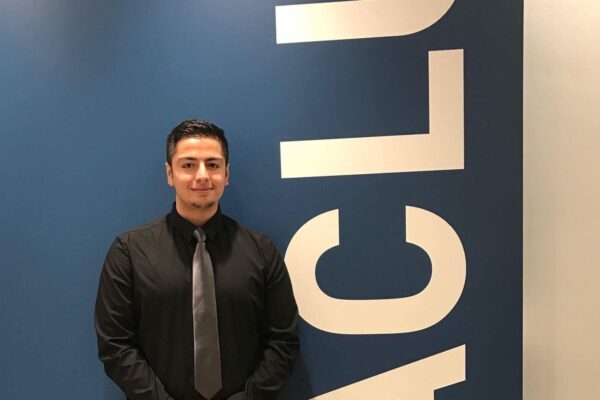
By Guillermo Camarillo, Communications Intern, Stanford in Government Program Recipient
This past summer, I initiated a project exploring the personal stories of Chicago-area DACA recipients as part of my internship with the ACLU of Illinois’ communications department. The aim of the project was to go beyond the complicated arguments regarding DACA’s constitutionality (though, it is). I wanted to emphasize that this program is about the livelihood, the aspirations, and the future of millions of immigrants. I hoped that by allowing recipients talk about the significance of DACA, we could give more agency to their stories, hopes and dreams.
My experience launching this project was humbling and a remarkable learning experience. Every step of the way, I learned something new. As someone who does not have DACA, I came to understand the meaning of DACA to each individual I interviewed. There were tears, smiles, frowns, and mixed emotions in every interview I conducted. There were unique stories of coming to the U.S. and of growing up in U.S. as well. But, above all, there was always that resilience exemplified in each individual I met. From individuals that attended top institutions to those that were not able to get a higher education, there was always hope of something better.
In many cases, that something better was DACA. DACA is what allowed many of these individuals to be their full, amazing selves. I say allow because I truly believe that DACA did not make these individuals amazing. They were already amazing before DACA but in many ways, were not able to be because they were restrained from taking advantage of many opportunities. DACA, in certain ways, allowed them to discover their own potential and at times be at an equal-playing field with their peers. As many mentioned in their interviews, they could be “normal” and take advantage of opportunities that those around them whom already had access.
This reflection is not to generalize the importance of DACA nor the experience of youth that are part of DACA per my few experiences with a handful of individuals I interviewed. Instead, I would like to emphasize that we must continue to allow those that are direct stakeholders of this issue to be the ones with the loudest voices in movements. Therefore, as allies, we must understand where we fall in this movement of defending DACA and work towards making the voices of those who will be most affected by DACA’s repeal heard.
With this, allies, I urge you to figure out your place in this movement by going directly to those that will be affected by DACA’s repeal and simply listen. In many cases listening is what may help us figure out where we fall in all of this.
To the legislators out there, I urge you to listen and understand the gravity of having a program like DACA for many youths.
For those that are on a crusade to end DACA, we will put up a fight.
Most importantly, for those that have DACA, you are not alone, we will stand and fight with you.