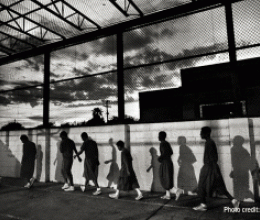
In 1999, the ACLU of Illinois filed suit against Cook County challenging the adequacy of the conditions at the County's Juvenile Temporary Detention Center (JTDC). At the time of the filing, conditions at the facility were deplorable -- unsafe, unsanitary and woefully lacking in services. The JTDC is one of the largest juvenile detention centers in the country. In the early years of this litigation, the ACLU spearheaded a number of court-ordered strategies to improve conditions -- agreements that the County failed to implement over many months.
In order to force compliance and reforms, the ACLU successfully sought the appointment of Earl Dunlap as the Transitional Administrator (TA) for the facility. Mr. Dunlap was given the authority to manage the day-to-day operations at the JTDC and to oversee the reform process.
Mr. Dunlap made substantial improvements to the facility. Shortly after Mr. Dunlap was selected as the Transitional Administrator, the Illinois General Assembly approved legislation giving control of the JTDC facility to the Chief Judge of the Circuit Court of Cook County. The Chief Judge recently selected Leonard Dixon, an experienced juvenile detention administrator, to serve as the new Superintendent.
On May 20, 2015, consistent with an agreed order, control over the facility was passed from Mr. Dunlap to Mr. Dixon. The Court recognized and praised the changes at the facility. Mr. Dunlap remained as an observer at the facility for three months to ensure a smooth, orderly transition.